Article: History of Hermès
History of Hermès
The History of Hermès: From Saddle Workshop to Luxury Empire
1837: A German saddler in Paris
Thierry Hermès, founder of the company that would bear his name, was born on January 10, 1801, in Krefeld, Germany. In 1829, he settled in Pont-Audemer, Normandy, a town renowned at the time for leatherwork. He was employed there as an apprentice to a saddler-harness maker. Having become a master saddler-harness maker, he returned to Paris in 1837, where he opened his first workshop at 56 rue Basse-du-Rempart, near the Madeleine church.
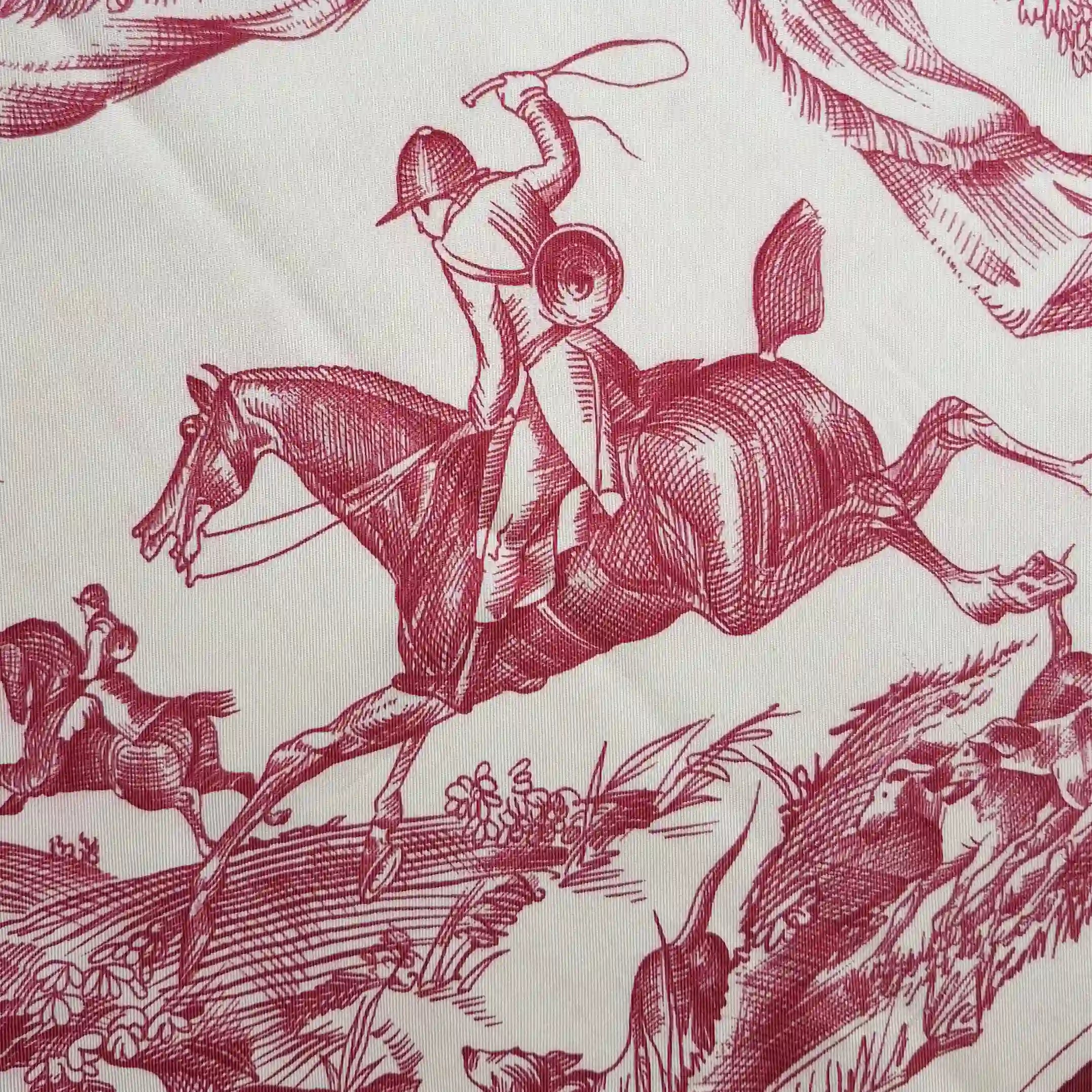
His trade: designing, manufacturing, and selling harnesses and equipment for horses. Paris, then undergoing rapid expansion, was a city where the horse was king. Demand was high, as was competition. Thierry Hermès distinguished himself with an obsession: absolute quality.
He was awarded a first-class medal at the 1867 Universal Exhibition, which allowed him to access a prestigious clientele, including world leaders such as Tsar Nicholas II. He died in Neuilly-sur-Seine in 1878.
1880: 24 Faubourg Saint-Honoré
In 1880, Charles-Émile Hermès, Thierry's son, took over the management of the house. He moved it to 24 rue du Faubourg-Saint-Honoré, where Hermès International is still based today.
This address is not a detail — it's a statement. The Faubourg Saint-Honoré is the quintessential street of Parisian luxury. By moving there, Charles-Émile definitively anchored Hermès in the capital's commercial elite.
He expanded activities into leather goods, and by the end of the 19th century, Hermès offered bags, clutches, and satchels for riders. The "Sac haut à courroie," released in 1892, allowing riders to store their boots and saddles, was a huge success. This success meant that many crowned heads and statesmen from Europe and around the world wanted to own Hermès.
Émile-Maurice Hermès: The visionary of the third generation
Émile-Maurice Hermès took over the management of the House in 1902. He was the one who would transform a saddlery workshop into a luxury house in the modern sense of the term.
His innovations were decisive. In 1918, he brought the zipper principle back from the United States, bought the patent, and applied it to the golf jacket of Edward, Prince of Wales, the first illustrious client. In 1922, he created the first leather handbag for women.
The fourth generation, due to the 1929 stock market crash, continued diversification, notably with the silk scarf, the leather agenda, and the Chaîne d'Ancre bracelet.
Émile-Maurice was also a passionate collector. On the first floor of the boutique, he created a private museum of exceptional works and objects — ancient games, royal saddles, rare equestrian items. It was in this collection that Robert Dumas found in 1957 the harness that would inspire Brides de Gala, the most reissued scarf in Hermès history.
1937: The birth of the silk scarf
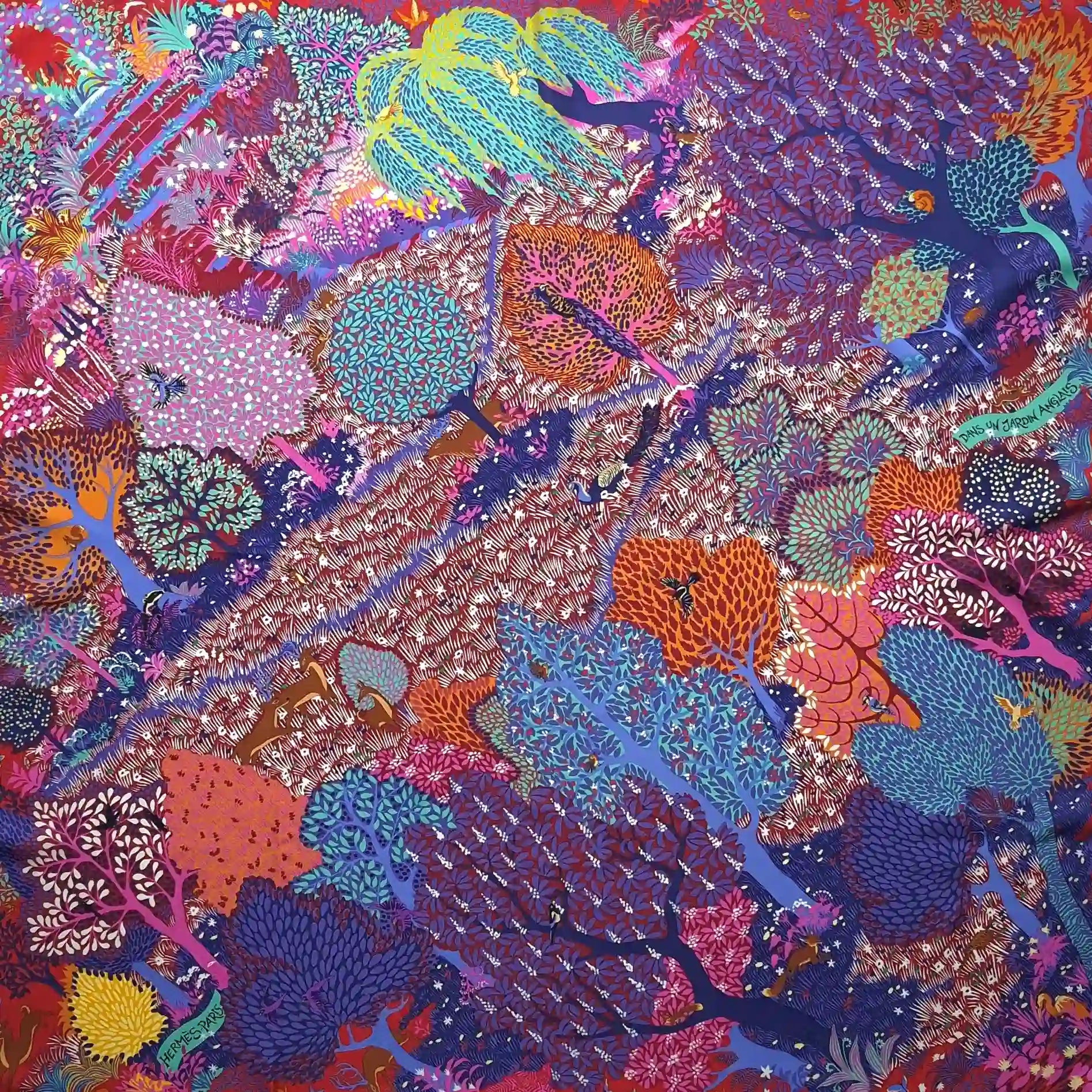
In 1937, Hermès introduced silk scarves which quickly became integrated into French culture.
They are made in Lyon, the French epicenter of silk manufacturing, and combine artisanal know-how and ultra-luxurious materials, all combined with extremely elaborate designs.
The first "Jeu des Omnibus et Dames Blanches" scarf was thus created in 1937 by Robert Dumas with Hugo Grygkar. It depicts a popular Parisian board game of the 19th century.
The 1950s-1960s: The golden age
Robert Dumas took over Hermès after his father-in-law's death in 1951. These years were those of international recognition. The Kelly bag, renamed after a photograph of Grace Kelly with the bag circulated worldwide, became one of the most desired objects on the planet.
In 1967, the French designer of Hungarian origin Catherine Karolyi was entrusted with the women's wardrobe. Until 1980, she designed clothing and accessories collections, including the famous H buckle.
Jean-Louis Dumas: The fifth generation revolutionizes everything
From 1978, Robert Dumas's son, Jean-Louis, progressively revolutionized the Hermès house. Visionary, curious about all things and all cultures, he diversified and projected the house onto the world map.
Jean-Louis Dumas was the most influential director in Hermès' modern history. Under his leadership, the House entered watchmaking in 1978, shoemaking with John Lobb in 1976, silversmithing with Puiforcat in 1993, and crystalware with Saint-Louis in 1989.
In 1984, aboard a Paris-London plane, he found himself sitting next to Jane Birkin. She explained that no bag on the market met her needs. So he pulled out a notebook and, with her, designed the bag that would bear her name. The very first Hermès Birkin bag, specially designed for her in 1984, was sold at auction in July 2025 at Sotheby's Paris for a record sum of 8.58 million euros.
Hermès has since opened numerous boutiques in fashion capitals: on Madison Avenue in New York in 2000, Tokyo in 2001, and Dosan Park in Seoul in 2006.
2013: The sixth generation
The Hermès house is now majority-owned by the family and has been led since 2013 by Axel Dumas, a member of the sixth generation.
Under Axel Dumas, Hermès consolidated its position as the second-largest French fortune after LVMH, a rivalry that almost cost the House its independence. Hermès grew from an SME to a family multinational with 22,000 employees. In 2023, it became the second-largest company in the CAC 40, with a valuation reaching 230 billion euros.
In 2021, Hermès opened its own school to train its artisans, ensuring the long-term transmission of savoir-faire.
What has never changed in 187 years
Since 1837, generation after generation, Hermès has followed a dual thread — on one side, the meticulous work of the artisan in their workshop, on the other, the lifestyles of its clients.
Six generations. Two centuries. One guiding principle: quality over growth. This is what has allowed Hermès to endure through wars, economic crises, and shifts in taste, without ever sacrificing what is essential.
The history of Hermès in figures
|
Year |
Key Event |
|---|---|
|
1837 |
Founded by Thierry Hermès, saddler |
|
1867 |
First-class medal at the Universal Exhibition |
|
1880 |
Moved to 24 Faubourg Saint-Honoré |
|
1892 |
First bag — the Haut à Courroies |
|
1937 |
First silk scarf |
|
1945 |
Official registration of the Duc Attelé logo |
|
1956 |
The Kelly bag — Grace Kelly and the historic photograph |
|
1957 |
Brides de Gala — the most reissued scarf in history |
|
1984 |
Birth of the Birkin bag with Jane Birkin |
|
2013 |
Axel Dumas — sixth generation |
|
2023 |
230 billion euros valuation |
Frequently asked questions
When was Hermès founded? Hermès was founded in 1837 in Paris by Thierry Hermès, a saddler-harness maker of German origin, born in Krefeld in 1801.
What did Hermès originally sell? In its early days, Hermès specialized exclusively in saddlery and the manufacture of harnesses for horses. Leather goods, silk scarves, perfumes, and accessories came much later, over the generations.
When did Hermès create its first silk scarf? The first Hermès scarf, "Le Jeu des Omnibus et Dames Blanches," was created in 1937 by Robert Dumas and Hugo Grygkar. Since then, over 2,000 different designs have been produced.
How many generations of the Hermès family have led the House? Six generations of the Hermès family have led the House since 1837. Axel Dumas, the current CEO since 2013, represents the sixth generation.
What is Hermès worth today? In 2023, Hermès is valued at 230 billion euros, making it the second-largest company in the CAC 40 after LVMH. The house employs 22,000 people worldwide, including 13,700 in France.
Why has Hermès never been acquired by LVMH? The Hermès family holds a majority stake in the House through the H51 holding company. When LVMH attempted a hostile takeover in the early 2010s, the family united to maintain its independence.
What is the historic address of Hermès in Paris? Hermès is located at 24 rue du Faubourg Saint-Honoré in Paris, an address unchanged for nearly 150 years.